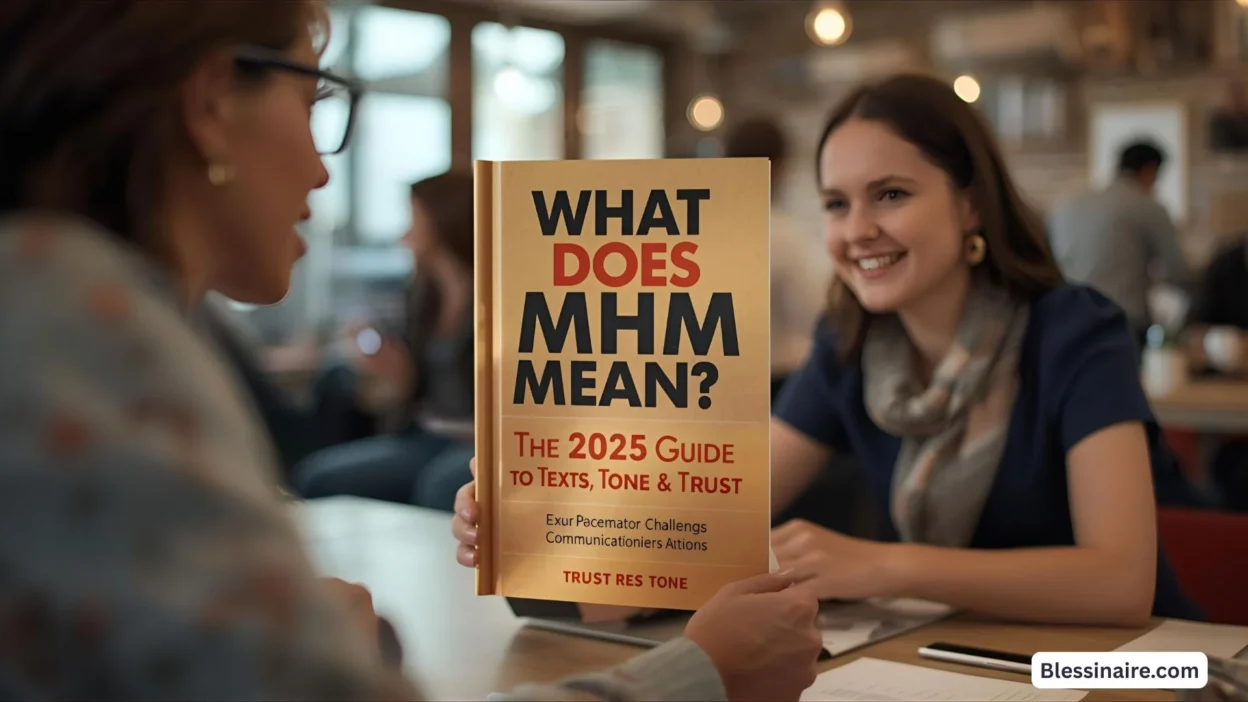
If you’ve ever stared at a text message containing just “mhm” and wondered if you’re being agreed with, dismissed, or flirted with, you’re not alone. This tiny, three-letter expression is a powerhouse of nuance in modern digital communication. More than just a simple “yes,” mhm is a tonal chameleon, changing its meaning based on context, punctuation, and your relationship with the sender.
In 2025, where texting is often the primary mode of conversation, understanding these subtleties is crucial. This definitive guide will decode the many layers of mhm, helping you interpret it correctly and use it effectively without causing confusion.
MHM Meaning in Texting
In texting, “mhm” is a casual and short reply that usually means “yes,” “okay,” or “I’m listening.” It is commonly used to show agreement without typing a full sentence and often acts as the digital version of nodding in a real conversation. Depending on the context and tone, mhm can also signal that someone is paying attention, feels neutral about the topic, or is giving a quick, low-effort response.
The Core Meaning: More Than Just “Yes”
At its most fundamental level, mhm is the written form of a non-verbal sound. It’s a digital stand-in for the affirming “mm-hmm” hum you make when nodding along in a real-life conversation.
- It’s Phonetic, Not Acronymic: Unlike LOL or BRB, mhm doesn’t stand for words. It’s a direct textual representation of a sound, capturing the closed-mouth hum of agreement or acknowledgment.
- The Digital Nod: Think of it as a non-verbal cue in verbal form. It communicates “I hear you,” “I’m following,” or “I agree” without the need for a full sentence.
- A Product of Efficiency: Its rise is linked to the early days of texting and instant messaging (like AOL Instant Messenger), where brevity was king. Typing “mhm” was quicker than “yes” or “I agree”.
- Universality of Sound: This humming sound of affirmation exists across cultures and languages, making mhm an intuitively understood piece of global digital slang.
Mhm vs. Mm-hmm vs. Hmm: A Critical Tone Breakdown
Don’t confuse mhm with its cousins. The spelling and punctuation create immediate tonal differences that can prevent major misunderstandings.
- Mhm: The standard, neutral form. It’s your go-to for casual, quick acknowledgment. It can lean positive, neutral, or skeptical depending on context.
- Mm-hmm (or Mhmm): The warmer, more engaged variant. The extra letters mimic a longer, more deliberate hum, often implying genuine interest, pleasure, or thoughtful agreement.
- Example: “Wasn’t that dessert amazing?” “Mm-hmm, I’m still thinking about it.”
- Hmm or Hmmm: This is a different sound entirely. It represents hesitation, thought, doubt, or curiosity. It’s the sound of thinking, not agreeing.
- Example: “Hmm, I’m not sure about that plan. Let me think.”
- Key Differentiator: Mhm/Mm-hmm are generally reactive (responding to someone else). Hmm is often proactive (initiating a thought).
The Many Faces of Mhm: 6 Contextual Meanings Decoded

- 1. Genuine & Enthusiastic Agreement: This is the positive, straightforward “yes.” Look for supporting cues like exclamation points or happy emojis.
- 2. Polite or Passive Acknowledgment: A neutral “I hear you.” It shows the person is listening but may not have a strong opinion or additional input to add.
- Example: “So then I had to call the bank, wait on hold for an hour…” “Mhm.”
- 3. Skeptical or Doubtful: This “mhm” drips with suspicion. The period or trailing ellipsis is a dead giveaway. It translates to “Sure… I’ll believe that when I see it”.
- 4. Dismissive or Annoyed: A short, cold “mhm.” often signals frustration, irritation, or a desire to end the conversation. It’s a classic in arguments.
- Example: “Are you even listening to me?” “Mhm.“
- 5. Flirty or Playful: In a romantic context, mhm becomes soft and teasing. It’s often paired with a suggestive emoji (😏, 😊) and implies a secret understanding or attraction.
- 6. Disinterested or Bored: A repetitive, flat “mhm” to every message indicates the person is not engaged. It’s a low-effort response to signal they’re just waiting for the chat to end.
The Tone Toolkit: Punctuation & Emojis That Define
In text, where voice tone is absent, punctuation and emojis are your emotional volume knobs. They define the intent behind the hum.
- Enthusiastic, excited, definite yes. The exclamation point injects energy.
- Final, closed-off, often annoyed. The period adds a sense of cold finality.
- Skeptical, thoughtful, doubtful. The ellipsis suggests there’s more unsaid.
- Questioning, asking for clarification. It turns the agreement sound into “Wait, what?”
- (All Caps) = Very strong agreement, possibly excited or sarcastically emphatic.
- Friendly, warm, kind agreement.
- Flirty, playful, knowing agreement.
- Unimpressed, flat, indifferent.Mhm ✅ = Confirmed, business-like acknowledgment.
What Does Mhm Mean from a Girl or Guy?
- From a Girl: Often carries layered nuance. It could be genuine, but pay extra attention to context. A flat “mhm.” after a disagreement might signal she’s upset, while a “Mhm 😊” could be warmly affectionate. In modern texting, girls may use it to maintain a low-pressure vibe.
- From a Guy: Often more direct but not always. It can be a simple acknowledgment. However, a sarcastic “Mhm…” from a guy is just as likely as from anyone else. The key is to avoid stereotypes and focus on your existing conversation patterns.
- Universal Rule: The sender’s typical communication style is a better clue than their gender. Someone who is usually effusive suddenly going “mhm.” is a major red flag, regardless of gender.
Professional Pitfalls: When to Avoid Mhm at Work
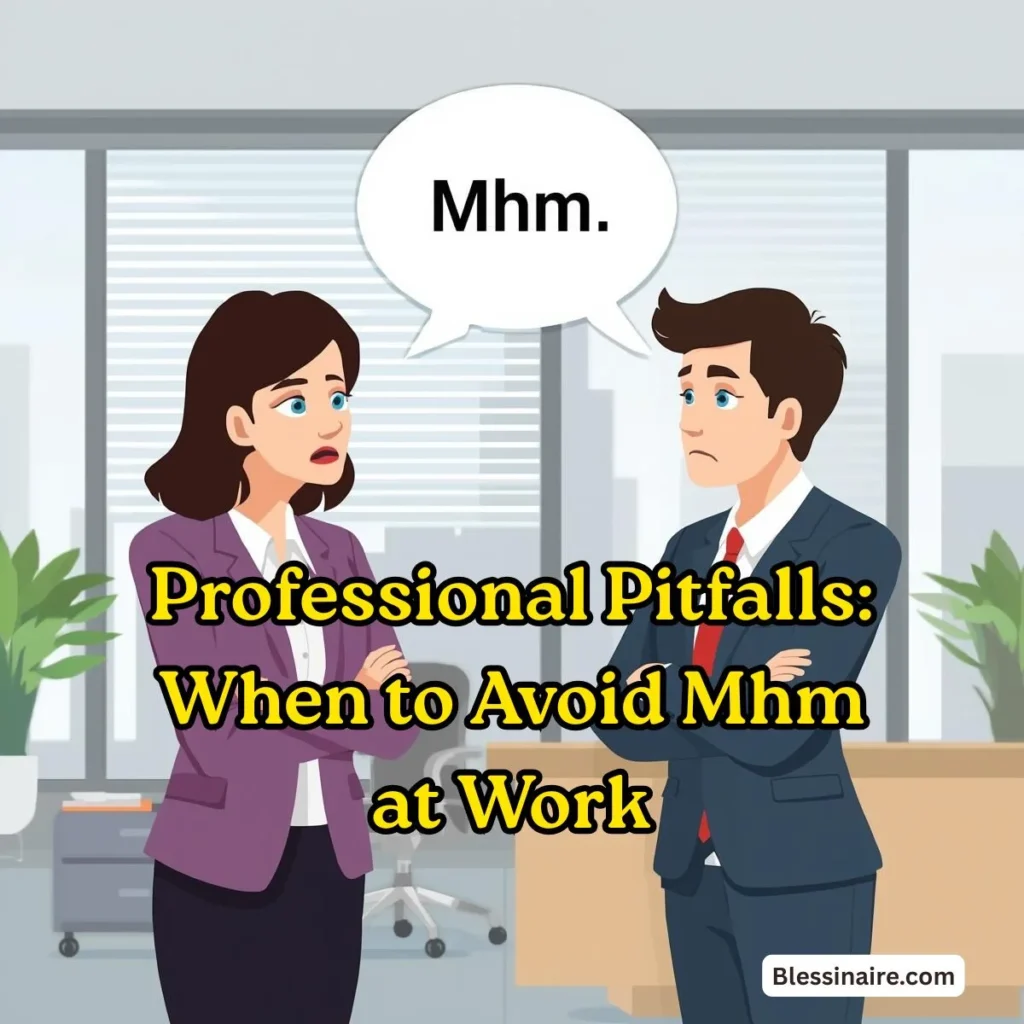
In 2025, with the lines between casual and professional chat blurring on platforms like Slack, caution is critical. Using mhm at work is often a misstep.
- Why It’s Risky: It can easily be perceived as lazy, dismissive, or unprofessional. It lacks the clarity and respect expected in workplace communication.
- High-Risk Scenarios: Avoid mhm when:
- Professional Alternatives to Use Instead:
How to Skillfully Reply to an “Mhm”
Don’t get stuck when you receive a vague mhm. Your reply should be a tone detective’s follow-up.
- If it’s Warm/Positive: Match the energy and keep the conversation flowing.
- If it’s Skeptical: Address the doubt directly with openness.
- If it’s Dismissive/Icy: Acknowledge the emotional shift and open the door for them to share.
- If it’s Flirty: Play along if you’re interested.
- If it’s Confusing: Use a light, open-ended question to gain clarity.
- Reply: “Take that as a yes?” or “Cool, should I move ahead with it?”
Polite & Casual Alternatives to Enrich Your Texts
Expanding your vocabulary beyond mhm makes you a clearer, more engaging communicator. Here are powerful substitutes for every context.
Strong, Polite Agreement:
Clear Acknowledgment:
Casual, Friendly Vibes:
When You’re On It:
- I’m on it.
- Consider it done.
- I’ll get started now.
- On my radar.
Mhm Across Platforms: SMS, Social & Dating Apps

The platform where you see mhm offers additional clues to its meaning.
- SMS/Standard Texting: The classic domain. Tone is derived purely from text, punctuation, and history.
- Instagram/Snapchat DMs: Often more casual and visual. A mhm reply to a story or photo is usually simple acknowledgment.
- TikTok & Twitter Comments: Can be used for sassy or meme-friendly agreement.
- Dating Apps (Hinge, Tinder): Proceed with extreme caution. An isolated “mhm” is often a conversation killer or sign of low effort. Use fuller sentences to show genuine interest.
- Workplace Chat (Slack, Teams): As a rule, use the professional alternatives listed in Section 6. Clarity trumps casualness here.
The Cultural & Generational Lens of Mhm
- A Global Sound, Local Text: The humming sound is nearly universal, but the spelling “mhm” is dominant in English-speaking digital spaces.
- Generational Comfort: Deeply embedded in Gen Z and Millennial texting lexicon, used instinctively. Older generations may find it more ambiguous or casual.
- Evolution of Language: Mhm exemplifies how digital communication creates new written forms of old sounds, prioritizing speed and the feel of spoken conversation.
FAQs: Your Top Questions, Answered
- ❓ Is it considered rude? It is not an inherently rude word, but it can easily be perceived as dismissive if used with a flat tone in sensitive contexts. Its politeness depends 100% on delivery and your relationship with the person.
- ❓ How should I interpret it from someone I’m interested in? Avoid overthinking based on gender alone. Decode it using context: check for emojis, punctuation, and the flow of the conversation. A playful “Mhm 😏” is a positive signal; a curt “mhm.” after you’ve shared something personal is likely not.
- ❓ Can it ever signify “no”? Not as a direct synonym. However, a sarcastic or heavily doubtful “mhm…” in response to a claim can strongly imply disbelief, which functionally serves a similar purpose to saying “no, I don’t believe that.”
- ❓ What’s the main difference between this and saying “okay”? “Okay” is more neutral and final, often simply acknowledging that information was received. This term is more of an active listening sound that affirms the other person is being heard. “Okay” can end a topic; this sound can subtly encourage the speaker to continue.
- ❓ How is it correctly pronounced? Exactly as it’s spelled: a closed-mouth hum, phonetically like “əm-hm” or “mm-hm.” It’s the verbal sound you naturally make when you nod your head in agreement.
The History of Mhm: From 1934 to Your DMs
- The Original Sound: The interjection “mm-hmm” was first recorded in dictionaries in 1934, though the sound itself is as old as human conversation.
- Digital Adoption: The spelling “mhm” emerged with early internet chat rooms and SMS in the late 1990s and early 2000s. The first Urban Dictionary entry dates to 2004, cementing its place in online slang.
- The Driving Force: Efficiency. In the era of T9 texting, “mhm” (4 keypresses) was significantly faster than “yes” (9 keypresses), propelling its adoption.
Body Language in Text: Mhm as a Digital Non-Verbal
Mhm is a prime example of how we recreate physical cues through words.
- The Nod: A genuine “Mhm!” is the equivalent of an eager, smiling nod.
- The Slow Nod: A thoughtful “Mhm…” mirrors a slow nod with a raised eyebrow.
- The Brusque Nod: A short “mhm.” is like a quick, minimal nod that says “I heard you,” without engagement.
- Understanding this metaphor is key to translating text back into human emotion.
When to Use it Yourself: A Strategic Guide
Now that you’re an expert, use mhm intentionally, not accidentally.
- Do Use Mhm When:
- Chatting with close friends or family in casual settings.
- You want to acknowledge a message quickly without a deep reply.
- You’re trying to mimic natural, flowing conversation (“And then she said…?” “Mhm?”).
- Paired with clear, positive cues (emojis, exclamations) to ensure your tone is understood.
- Don’t Use Mhm When:
- The conversation is emotionally charged or serious.
- You’re in a professional or formal setting.
- You’re trying to express genuine enthusiasm or deep agreement (use stronger words).
- You’re apologizing or discussing important relationship matters.
The Bigger Picture: Mhm & Modern Communication
Mastering a small word like this is part of a larger skill: digital emotional intelligence. In 2025, our relationships are sustained through texts, DMs, and chats. The ability to read between the letters—to interpret a “mhm,” a period, or a chosen emoji—is essential for maintaining clear and meaningful connections. It reminds us that even in the fastest, most abbreviated exchanges, human tone and intention always find a way through.
Conclusion: The Power of Three Letters
In the end, mhm is a microcosm of modern communication: efficient, nuanced, and rich with subtext. It’s not just slang; it’s a digital artifact of human connection, a written hum that carries agreement, doubt, affection, or annoyance. By treating it not as a mere word but as a tone-of-voice indicator, you unlock a deeper understanding of your digital conversations. So the next time “mhm” pops up on your screen, pause. Consider the context, inspect the punctuation, and remember this guide. That simple, powerful hum is no longer a mystery, but a clear message waiting to be understood. Use this knowledge not just to decode, but to communicate more thoughtfully yourself.

I write to share spiritual blessings that inspire gratitude, strengthen faith, and bring peace to the heart. My goal is to help others see each day as a sacred gift filled with love and light.