

Wordle has become more than a simple online game. For millions of players, it is a daily ritual—played in the morning with coffee, during breaks, or as a quiet mental warm-up. What makes NYT Wordle unusual is not just its popularity, but its restraint. One puzzle per day. No ads interrupting play. No pressure to keep clicking.
Since becoming part of The New York Times Games collection, Wordle has proven that a thoughtfully designed puzzle can outperform far more complex digital games. This guide goes deeper than surface-level tips. It explains how Wordle works, how streaks really matter, how popular strategies compare, and how players can improve consistently without turning the game into a chore.
What Is NYT Wordle and How It Works
NYT Wordle is a browser-based word puzzle where players guess a hidden five-letter word in six attempts. Every player worldwide receives the same word each day. After each guess, the game provides color-coded feedback:
- Green: correct letter in the correct position
- Yellow: correct letter in the wrong position
- Gray: letter not included in the word
The simplicity is deliberate. There are no hints, no difficulty levels, and no replays. Once you complete the puzzle—win or lose—you wait until the next day.
This structure forces thoughtful decision-making rather than endless trial and error.
Why NYT Wordle Became a Daily Habit
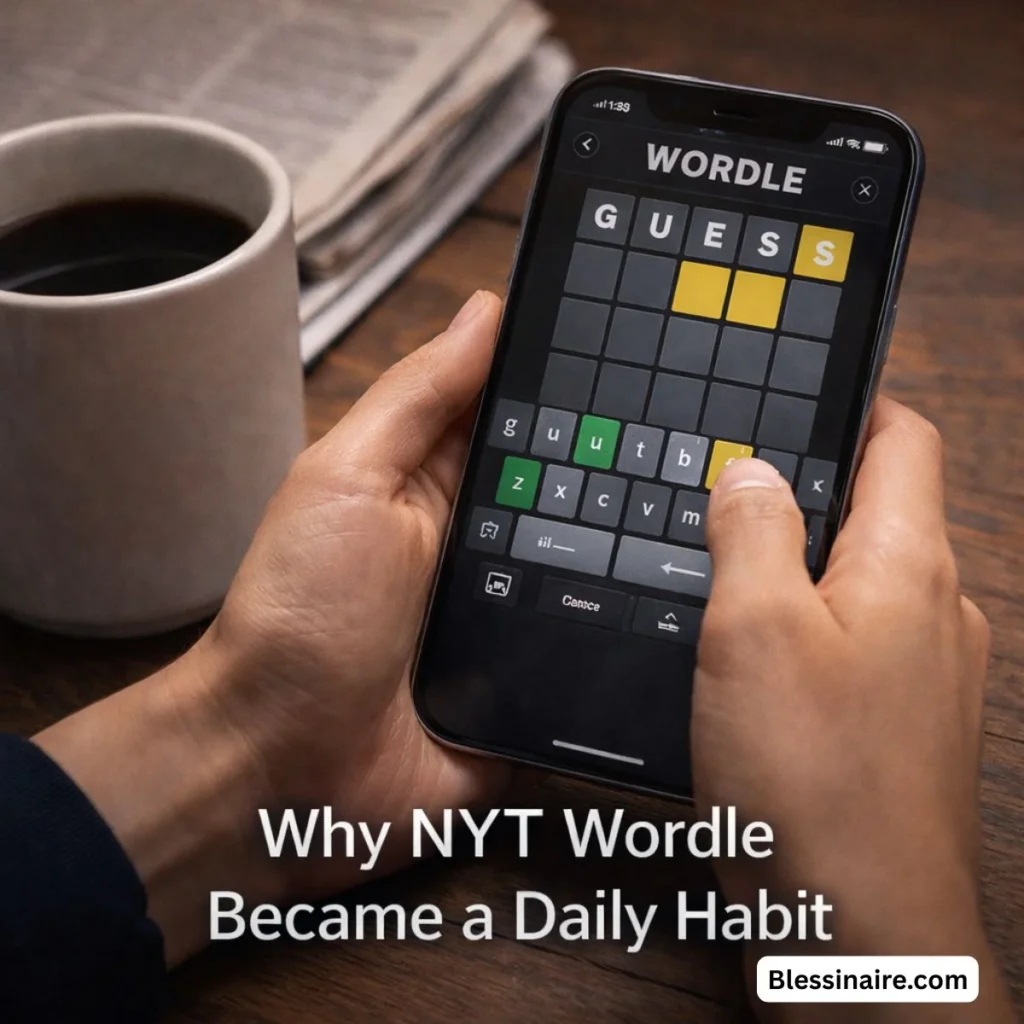
Wordle’s success is rooted in design discipline.
Limited Access Builds Anticipation
Most games try to maximize screen time. Wordle limits it. That single-puzzle constraint prevents burnout and keeps players returning willingly.
Equal Experience for Everyone
There is no advantage tied to skill level, money, or time invested. Every player starts with the same information each day.
Social Sharing Without Spoilers
The familiar emoji grid allows players to share results without revealing the answer. This created organic conversation without ruining the game.
Wordle respects time and intelligence—qualities that are increasingly rare in digital entertainment.
Understanding Wordle Streaks: What Actually Matters
A Wordle streak counts how many consecutive days a player solves the puzzle correctly. For many players, maintaining a streak becomes part of the motivation.
However, streaks are psychological rewards, not indicators of mastery.
Important points about streaks:
- They reward consistency, not perfection
- A broken streak does not reflect declining skill
- Obsessing over streaks often increases mistakes
Strong players focus on process, not streak preservation. Ironically, this leads to longer streaks over time.
The Five-Word Strategy Explained (And Why It’s Popular)
One of the most discussed Wordle approaches is the five-word coverage strategy. The idea is simple:
- Use five predetermined words
- Cover 25 unique letters
- Eliminate most of the alphabet before solving
This strategy became popular because it:
- Maximizes information early
- Reduces uncertainty
- Almost guarantees a solution by the sixth guess
Players often choose words that collectively include rare letters such as J, Q, X, and Z alongside common vowels.
Pros and Cons of the Five-Word Strategy
Advantages
- Excellent for protecting streaks
- Reduces guesswork
- Useful for players who dislike risk
Disadvantages
- Removes creative problem-solving
- Often delays the actual solution
- Can make the game feel mechanical
- Less satisfying for experienced players
The five-word strategy is effective, but not always enjoyable.
When the Five-Word Strategy Makes Sense
This method works best when:
- You are close to losing a long streak
- You feel mentally rushed
- You want guaranteed success over enjoyment
It is less suitable for:
- Learning Wordle patterns
- Improving deduction skills
- Players who enjoy experimentation
Think of it as a safety net, not a default playstyle.
Alternative Opening Strategies That Build Skill
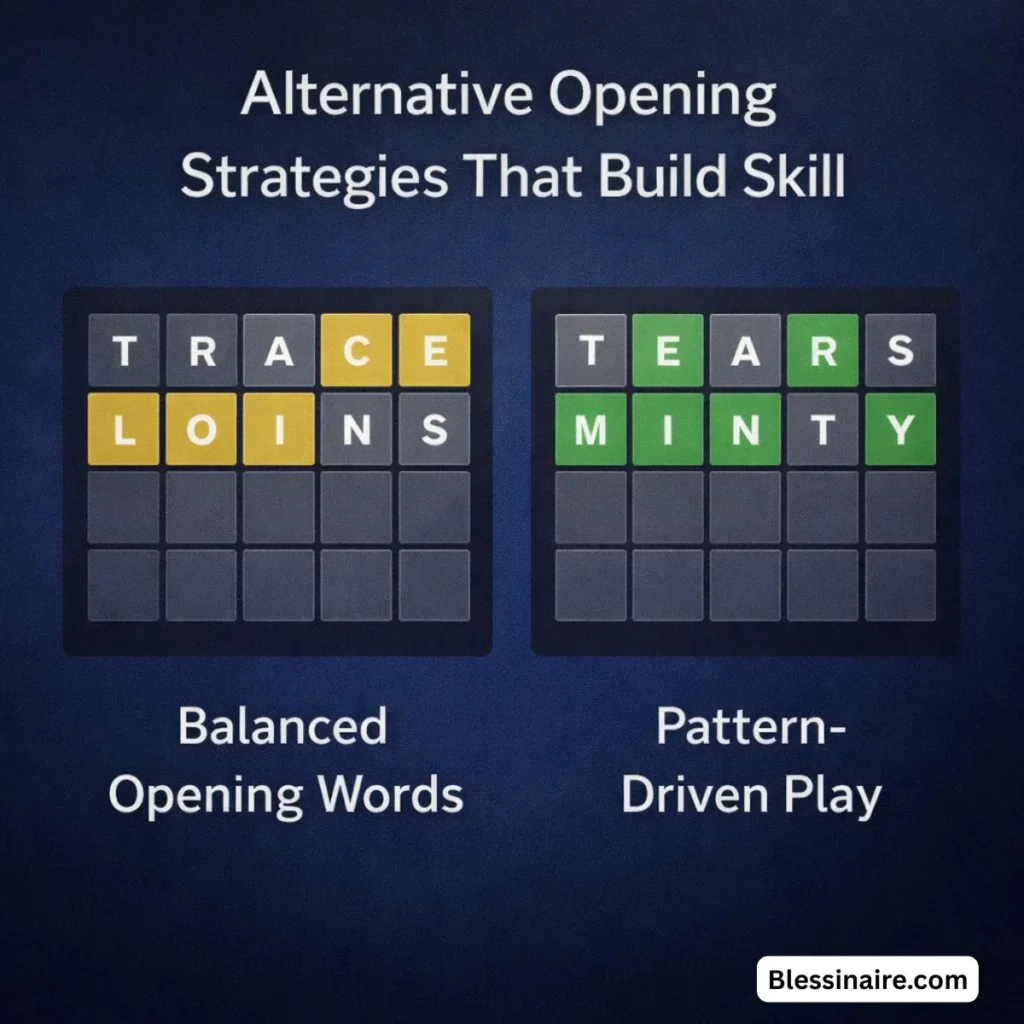
Many experienced players prefer adaptive openings instead of fixed word lists.
Balanced Opening Words
Strong opening guesses usually include:
- Two or three vowels
- Common consonants (R, S, T, L, N)
This approach gathers information while leaving room for adjustment.
Pattern-Driven Play
Instead of eliminating letters aggressively, players focus on:
- Common English word structures
- Likely endings
- Letter frequency in positions
This style improves long-term skill and keeps the game engaging.
Beginner vs Advanced Wordle Playstyles
Beginner Players
- Focus on vocabulary
- Guess more randomly
- Rely on luck early
Intermediate Players
- Eliminate letters efficiently
- Track yellow placement carefully
- Start thinking in patterns
Advanced Players
- Predict likely word forms
- Use minimal guesses
- Adapt strategy dynamically
Progression happens naturally with repetition—not memorization.
Common Mistakes That End Wordle Streaks
Even experienced players make avoidable errors:
- Reusing gray letters unnecessarily
- Ignoring yellow letter placement rules
- Guessing rare words too early
- Overthinking simple solutions
- Playing while distracted
Wordle rewards calm attention more than speed.
The Psychology Behind Daily Puzzle Games
Wordle works because it aligns with how the brain enjoys challenge:
- Short, defined tasks feel achievable
- Clear feedback encourages learning
- Daily resets prevent overload
- Mild risk creates excitement
Unlike addictive loops, Wordle offers closure, which builds trust and long-term engagement.
Why NYT Wordle Is Not Gambling or Luck-Based
Wordle includes uncertainty, but uncertainty alone does not equal gambling.
Key differences:
- No money involved
- No wagering or prizes
- Outcomes improve with skill
- Results are based on logic, not odds
Wordle is best described as a skill-based puzzle with randomness, similar to crosswords or logic games.
Wordle vs Copycat Games
Many Wordle-style games appeared after its success. Most failed to match its longevity because they lacked:
- Restraint
- Clear identity
- Shared experience
- Design consistency
NYT Wordle succeeds by not expanding unnecessarily.
How NYT’s Ownership Shaped Wordle’s Future
After acquisition, The New York Times made a key decision: do not over-optimize.
The game remained:
- Free to play
- Visually consistent
- Mechanically unchanged
This preserved trust and kept Wordle from becoming another short-lived trend.
Is Wordle Skill or Luck?
Over a single game, luck plays a role. Over weeks or months, skill dominates.
Players who:
- Track information carefully
- Learn letter behavior
- Stay patient
Consistently outperform random guessing.
Frequently Asked Questions
Is NYT Wordle free? Yes, it remains free to play.
Do words repeat? Rarely, but repetition is possible over long periods.
Can letters appear twice? Yes. Many players forget this.
Is there a “best” strategy? No. The best strategy is the one you enjoy and execute well.
Does Wordle track personal data? Only basic statistics stored locally in your browser.
Final Thoughts
NYT Wordle succeeds because it does less—and does it better. By combining thoughtful constraints, clear feedback, and respect for the player’s time, it became a daily habit rather than a fleeting trend.
Strategies like the five-word method have their place, but true mastery comes from understanding patterns, staying flexible, and enjoying the process. Whether you play for streaks or satisfaction, Wordle remains a reminder that simplicity, when designed well, is powerful.

I write to share spiritual blessings that inspire gratitude, strengthen faith, and bring peace to the heart. My goal is to help others see each day as a sacred gift filled with love and light.