
Baby blessings represent a profound tradition across cultures and faiths, symbolizing the welcoming of a new child into family and community through spiritual dedication. These meaningful ceremonies, whether called christenings, dedications, or naming ceremonies, share the common purpose of celebrating new life while invoking divine protection, love, and guidance for the child’s journey ahead. Unlike sacraments like baptism in some traditions, baby blessings often serve as a preliminary ritual that welcomes infants into religious community without the theological weight of salvation ordinances, making them accessible to families of diverse spiritual backgrounds .
The emotional significance of baby blessings extends beyond religious doctrine, touching universal human desires to protect, celebrate, and formally welcome newborns into our communities. These ceremonies create cherished memories for families while establishing spiritual foundations that many children later build upon through their own faith decisions. The beautiful tradition of gathering loved ones to speak words of blessing over a child represents one of humanity’s oldest and most cross-culturally consistent practices, adapting beautifully to modern interfaith families and contemporary spiritual expressions while maintaining its core meaning .
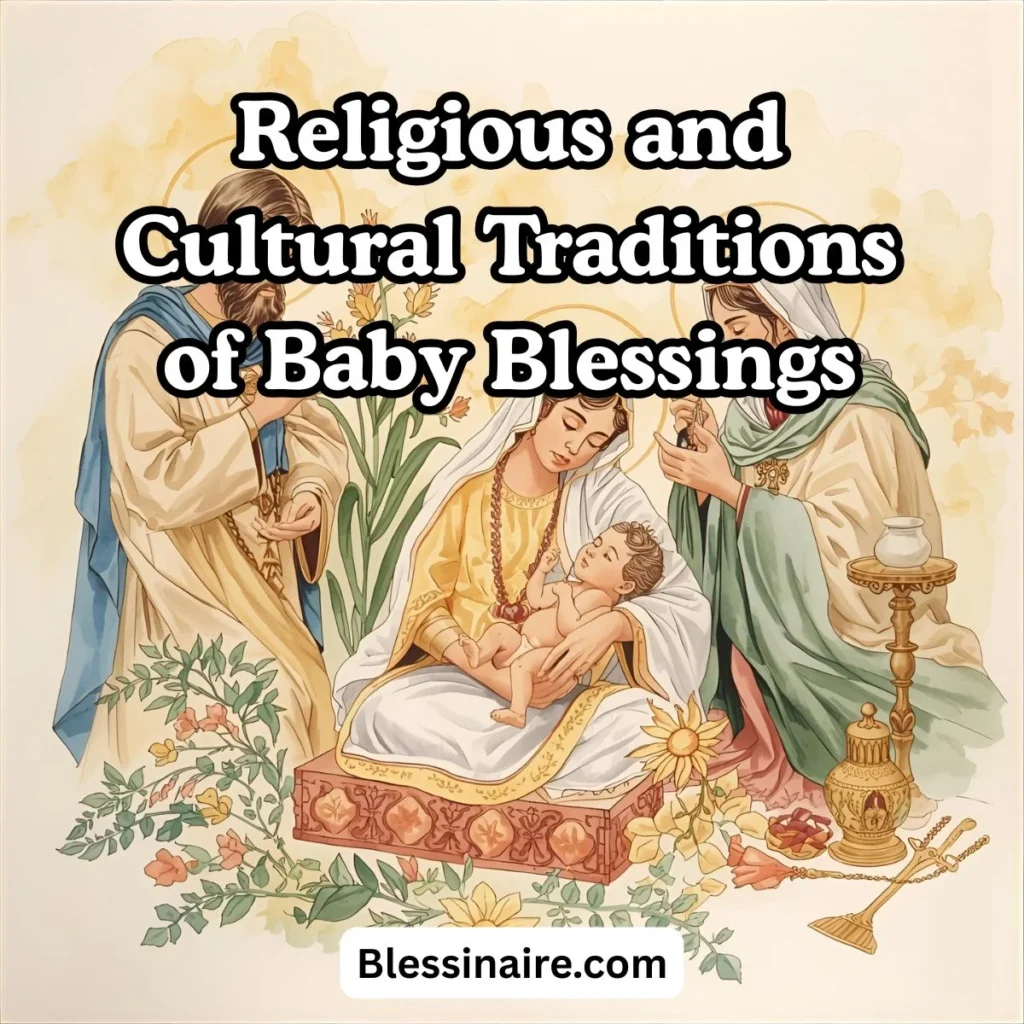
Religious and Cultural Traditions of Baby Blessings
Latter-day Saint (LDS) Baby Blessings
In The Church of Jesus Christ of Latter-day Saints, baby blessings typically occur during fast Sunday services where Melchizedek Priesthood holders gather in a circle, place hands under the baby or lightly on an older child’s head, and offer a blessing that includes giving the child a name. The father usually acts as “voice” in pronouncing the blessing, which formally establishes the child as a “member of record” in the church community while invoking spiritual gifts, future blessings, and divine protection . Historically, some Latter-day Saint families practiced eighth-day blessings eight days after birth, echoing ancient Jewish circumcision traditions, though current practice emphasizes the congregational blessing .
Christian Baby Dedications
Many Protestant traditions practice baby dedication ceremonies where parents present their child before God and the congregation, committing to raise the child in accordance with Christian principles. These ceremonies often include congregational promises to support the family, parental vows to provide spiritual guidance, and pastoral prayers for the child’s wellbeing and future. Unlike infant baptism, these dedications don’t involve water but focus on parental commitment and community support .
Catholic Traditions
While the Catholic Church primarily practices infant baptism, baby blessings often occur in informal settings or through special blessings for children not yet baptized. Many Catholic families seek priestly blessings for newborns, particularly when baptism may be delayed, asking for God’s protection and grace over the child’s early life .
Interfaith and Secular Blessings
Contemporary baby blessing ceremonies have evolved to include interfaith elements, non-religious spiritual expressions, and completely secular “welcome ceremonies” that maintain the core values of community commitment to supporting a child’s development without specific religious doctrine .
Table: Comparison of Baby Blessing Traditions Across Faiths
| Tradition | Typical Timing | Key Participants | Primary Purpose |
| LDS Naming Blessing | First few months, often Fast Sunday | Melchizedek Priesthood holders, father as voice | Formal naming, church record, spiritual blessing |
| Protestant Dedication | Varies, often 3-6 months | Parents, pastor, congregation | Parental commitment, congregational support |
| Catholic Blessing | Anytime after birth | Priest, parents, godparents | Invoking God’s protection before baptism |
| Interfaith Ceremony | Flexible timing | Family, friends, spiritual leaders | Community welcome, symbolic dedication |
Heartfelt Baby Blessing Wishes and Messages
Religious and Spiritual Blessings
- “May God bless this precious child with health, happiness, and a life filled with love” – a beautiful invocation of divine care and protection
- “Children bring us a piece of heaven on earth” – recognizing the sacredness new life brings to families and communities
- “For this child, we have prayed” – perfect for families who have experienced fertility challenges or long-awaited adoption
- “Our little miracle is here” – acknowledging the wonder of new life, especially meaningful for babies born under difficult circumstances
- “Fearfully & Wonderfully Made” – a scriptural reference that honors the divine creation of each unique child
- “All of God’s grace in one little face” – capturing the theological concept of grace in accessible, emotional language
- “May you know that you were wished for, longed for and will always be loved” – affirming the child’s valued place in the family
- “God is trusting you with a precious gift and He will guide you as you embark on this fantastic journey” – offering both celebration and reassurance to new parents
Simple and Sentimental Wishes
- “Tiny toes, big love” – capturing the paradox of small humans creating enormous emotional impact
- “Welcome to the world, little one” – classic, timeless greeting appropriate for any blessing scenario
- “The beginning of everything … hope, dreams and opportunity” – forward-looking blessing that acknowledges the child’s potential
- “So tiny, so small and loved by all” – emphasizing community love and support
- “From small beginnings come great things” – inspirational message for the child’s future
- “Your first breath took ours away” – beautifully capturing the overwhelming emotion of new parenthood
- “Something tells me I am going to love him/her forever” – simple, profound statement of enduring commitment
- “Just when we thought our hearts couldn’t get fuller…” – particularly meaningful for subsequent children
Blessings for Cards and Written Messages
- “Like stars are to the sky, so are the children to our world” — Chinonye J. Chidolue – poetic acknowledgment of children’s universal importance
- “For all the things my hands have held, the best by far is you” – beautiful sentiment that can be attributed to parent or spoken to child
- “It was the tiniest thing I ever decided to put my whole life into” — Terri Guillemets – capturing the total commitment of parenting
- “With every newborn baby, a little sun rises” — Irmgard Erath – lovely metaphorical blessing
- “And she loved a little boy very much, even more than she loved herself” — The Giving Tree – nostalgic literary reference many parents recognize
Baby Blessing Ceremony Planning Guide
Setting the Date and Location
Most baby blessings occur within the first few months of life, with timing influenced by religious traditions, maternal recovery, and family logistics. LDS blessings typically happen during regular worship services on “fast Sunday” , while other traditions may schedule dedicated ceremonies. Consider family travel needs, maternal health, and religious calendars when selecting your date. Traditional locations include:
- Local churches or worship spaces
- Family homes for more intimate gatherings
- Outdoor settings for warmer months or larger gatherings
- Community centers for interfaith or secular ceremonies
Selecting Participants
The circle of blessing varies by tradition but typically includes spiritually significant individuals in the family’s life. In LDS traditions, only Melchizedek Priesthood holders participate directly in the ordinance, though mothers may hold microphones or sit nearby . Other traditions often include:
- Grandparents as honored witnesses
- Godparents or spiritual mentors who pledge support
- Siblings who may participate in symbolic ways
- Close friends representing the broader community
- Religious leaders who officiate or contribute prayers
Preparing the Ceremony Program
A thoughtful blessing ceremony flows seamlessly between elements, balancing tradition with personal touches. Consider this structure:
- Welcome and opening prayer – setting spiritual tone
- Scripture reading or inspirational reading – establishing theological foundation
- Naming ceremony – formal announcement of child’s name and meaning
- Blessing ritual – central act of blessing through prayer or laying on of hands
- Parental vows – commitments regarding child’s upbringing
- Community pledges – congregation or guests promise support
- Closing blessings and formal conclusion
- Celebratory gathering – meal or reception following ceremony
Baby Blessing Announcements and Invitations
Wording Ideas for Announcements
- “With hearts full of love and gratitude, we invite you to witness the blessing of [Baby’s Name]” – formal and traditional
- “Please join us as we dedicate our daughter/son [Baby’s Name] to God and celebrate with our community” – clearly religious
- “You’ve shared in our journey, now share in our joy as we bless [Baby’s Name]” – personal and inclusive
- “Our family is growing in love and faith! Join us for [Baby’s Name]’s blessing ceremony” – warm and celebratory
- “We’re having a blessing! Help us welcome [Baby’s Name] into our spiritual community” – casual and contemporary
Social Media Announcements
- “So blessed! Today we dedicated [Baby’s Name] to God surrounded by loved ones ❤️ #BabyBlessing #Family”
- “The biggest blessings come in small packages. Grateful to have [Baby’s Name] blessed today 🌟”
- “Our hearts are full after [Baby’s Name]’s blessing ceremony. So much love surrounding our little one!”
- “Officially welcomed [Baby’s Name] into our faith community today. So grateful for everyone who joined us!”
- “A perfect day for a blessing! So much love for our little [Baby’s Name] 💕”
Information to Include
- Baby’s full name and birth date (optional)
- Date, time, and location of ceremony
- Dress code expectations if relevant
- RSVP deadline and contact information
- Reception details if separate from ceremony
- Registry information if appropriate (though typically not included for religious ceremonies)
What to Say During a Baby Blessing
Traditional Blessing Elements
LDS baby blessings typically include these components spoken by the father or other priesthood holder: formal naming of the child, expressions of gratitude, blessings of health and protection, spiritual gifts, future guidance, and special promises contingent on righteousness . The blessing is given extemporaneously through spiritual inspiration rather than read from prepared text .
General Blessing Components
- Address to deity – “Heavenly Father” or “Lord God”
- Thanksgiving – gratitude for the child’s safe arrival and health
- Petitions for protection – physical safety and emotional wellbeing
- Spiritual blessings – faith, character traits, future relationship with God
- Relational elements – family bonds, friendships, future marriage
- Life guidance – wisdom in decisions, purpose and calling
- Parental support – wisdom, patience, resources for parents
- Closing – “In the name of Jesus Christ, Amen” or similar
Simple Phrases for Personal Blessings
- “May you always know you are loved – by your family, your community, and by God”
- “We bless you with curiosity to explore this beautiful world and wisdom to navigate its challenges”
- “May you develop a kind heart, a strong spirit, and a joyful approach to life”
- “We ask for angels to watch over you and guide you throughout your life”
- “May you find your unique purpose and have courage to follow it”
Baby Blessing Etiquette for Guests
Appropriate Gift Ideas
- Religious items: Child-friendly Bibles, faith-based storybooks, cross or religious symbol jewelry
- Memory keepers: Engraved photo frames, blessing ceremony certificates, memory boxes
- Practical items: Quality baby blankets, clothing for future religious ceremonies, donation to child’s college fund
- Symbolic gifts: Guardian angel figurines, birthstone jewelry, family trees
- Experiential gifts: Professional photography sessions, restaurant gift cards for parents, offers of babysitting
Ceremony Conduct
- Arrive early to find seating without disrupting the ceremony
- Dress modestly and appropriately for the religious setting
- Silence electronic devices completely during the ceremony
- Follow along with any program or responsive readings
- Remain quiet during the actual blessing prayer, even if children are fussing
- Participate fully in any congregational responses or singing
- Approach the family after the ceremony for personal congratulations unless communion or similar ritual is occurring
After the Ceremony
- Offer sincere congratulations to both parents and extended family
- Take photographs discreetly unless invited to do so more actively
- Attend the reception if invited, even if briefly
- Send thank you notes if you hosted or organized elements of the blessing
- Follow up in coming weeks with offers of practical help or meals
Baby Blessing Decorations and Themes
Religious Symbolism
- Dove motifs representing the Holy Spirit
- Cross or crucifix decorations in appropriate traditions
- Scripture verses calligraphed and displayed
- Angelic imagery including cherubs and protective angels
- White and gold color schemes symbolizing purity and divinity
- Lamb imagery representing Jesus as the Lamb of God
- Olive branches indicating peace and God’s blessing
Seasonal Themes
- Spring blessings: Pastel colors, floral arrangements, garden themes, rebirth symbolism
- Summer celebrations: Bright colors, outdoor elements, sunshine motifs, vibrant energy
- Fall ceremonies: Rich earth tones, harvest symbolism, changing leaves, gratitude themes
- Winter blessings: Cool blues and silvers, star motifs, candlelight, hope symbolism
Personal Touches
- Family heritage elements incorporating cultural traditions
- Baby’s nursery colors creating visual continuity
- Name meaning displays highlighting the significance of the child’s name
- Family prayer traditions integrated into the ceremony
- Sibling involvement in decoration creation or ceremony participation
- Memory tables featuring photos of ancestors and religious relatives
Documenting and Preserving Blessing Memories
Photography and Videography
- Hire professionals for at least part of the ceremony to ensure quality results
- Designate a friend with good photography skills to capture candid moments
- Request no flash during the actual blessing to maintain reverence
- Capture details: hands laid on the baby, family faces during the blessing, ceremonial items
- Take group photos after the ceremony with various family combinations
- Record video of the blessing itself since parents may be too emotional to remember details
Memory Preservation Ideas
- Blessing certificate signed by officiants and witnesses
- Journal entries from parents about their feelings and the ceremony
- Guest book with messages and blessings from attendees
- Recording or transcript of the actual blessing words
- Shadow box containing the outfit, invitation, and ceremony program
- Time capsule with letters to the child to be opened at future milestones
Sharing with Absent Loved Ones
- Live streaming the ceremony for distant relatives
- Creating photo albums specifically for grandparents
- Social media announcements with selected photos
- Thank you cards featuring a ceremony photo
- Annual updates on the child’s birthday recalling their blessing
Special Circumstances and Adaptations
Multiples Blessings
- “Double trouble! Our twins are here” – humorous approach to twin blessings
- “Two means double the fun” – emphasizing the joy of multiples
- “Two little miracles have joined your family” – acknowledging the special nature of multiples
- “Double the smiles and twice the love” – focusing on positive aspects
- “Your hands will be full, but so will your heart” – realistic yet encouraging
- Ceremony adaptation: Bless each child individually with unique words while maintaining the same ritual structure
- Logistical planning: Enlist additional helpers to manage multiple babies during the ceremony
Adoption Blessings
- “All your dreams of parenthood have come true” – validating the adoption journey
- “This new baby is the luckiest in the world to have found parents like you” – celebrating the adoptive parents
- “Your bundle of joy was meant for you” – affirming divine planning
- “This little one is a precious gift and we know s/he’s the one you’ve been dreaming of” – acknowledging anticipation
- “However parenthood comes to you, it’s a miracle” – inclusive celebration of all paths to parenthood
- Ceremony emphasis: Focus on themes of chosenness, destiny, and spiritual preparation
- Language adjustments: Incorporate both “birth” and “joining family” narratives appropriately
Interfaith Blessings
- Respectful integration of traditions from both faith backgrounds
- Clear explanation of rituals for guests unfamiliar with either tradition
- Inclusive language that acknowledges multiple understandings of divinity
- Joint participation of religious leaders from both faiths when possible
- Focus on common values like love, protection, and community support
Frequently Asked Questions About Baby Blessings
What’s the difference between a baby blessing and baptism?
Baby blessings (also called dedications or christenings in some traditions) are ceremonies that welcome infants into religious community and invoke God’s protection, typically without using water. Baptisms are sacraments involving water that symbolize spiritual cleansing, dying to sin, and rebirth in Christ. In traditions that practice believer’s baptism (like many Protestant churches), baby blessings serve as placeholders until the child is old enough to choose baptism for themselves .
Who can perform a baby blessing?
This varies significantly by tradition. In LDS practice, only worthy Melchizedek Priesthood holders may perform the ordinance, typically with the father acting as voice . In other Christian traditions, ordained ministers, priests, or pastors typically officiate. So in less formal settings, family elders or spiritual leaders may offer blessings. For interfaith or non-religious ceremonies, parents may design their own rituals and invite respected community members to participate.
What should babies wear for their blessing ceremony?
Traditional blessing outfits often include white or ivory garments symbolizing purity, though this varies by culture and tradition. Many families use heirloom christening gowns passed through generations. Contemporary choices include:
- White blessing gowns or suits
- Family heirlooms with sentimental value
- Cultural traditional garments representing family heritage
- Comfortable dressy outfits appropriate for the season
- Simple special outfits that may be worn again on first birthday
How soon after birth should a baby blessing occur?
Timing varies widely across traditions and personal circumstances. LDS blessings typically occur within the first few months during a fast Sunday . Catholic traditions may bless babies before baptism at various ages. Practical considerations include:
- Maternal recovery from childbirth
- Family travel logistics
- Religious calendars and availability
- Weather and season considerations
- Baby’s health and development
Can siblings participate in baby blessing ceremonies?
Yes! Sibling involvement can make the ceremony more meaningful for the whole family. Age-appropriate roles include:
- Helping with ceremonial elements like holding a blanket
- Reading simple blessings or poems
- Standing with the family during the blessing
- Passing out programs or ceremonial items
- Singing special songs with the congregation
Conclusion: The Lasting Impact of Baby Blessings
Baby blessings create spiritual landmarks in family narratives, marking the formal welcome of a new child into a circle of love that encompasses both earthly relationships and divine care. These sacred moments, whether celebrated through elaborate religious ceremonies or simple family prayers, establish spiritual foundations that many children build upon throughout their lives. The community commitment witnessed during baby blessings creates networks of support that sustain families through the challenges of parenting while reminding everyone present of the sacred responsibility we share toward the next generation.
Beyond religious significance, baby blessing ceremonies fulfill deep human needs for ritual, community, and hope for the future. They gather loved ones to affirm that each child arrives as a precious gift surrounded by love and promise. However you choose to structure this meaningful event, the act of speaking words of blessing over a child creates enduring memories and spiritual connections that resonate through years, reminding each child they were welcomed, celebrated, and blessed from their earliest days.

I write to share spiritual blessings that inspire gratitude, strengthen faith, and bring peace to the heart. My goal is to help others see each day as a sacred gift filled with love and light.